
What is cross-border settlement, and why does it matter for remittance companies?
How modern cross-border settlement helps remittance companies pay out in seconds, reduce prefunding and cut FX cost, with a real Europe-LATAM example.
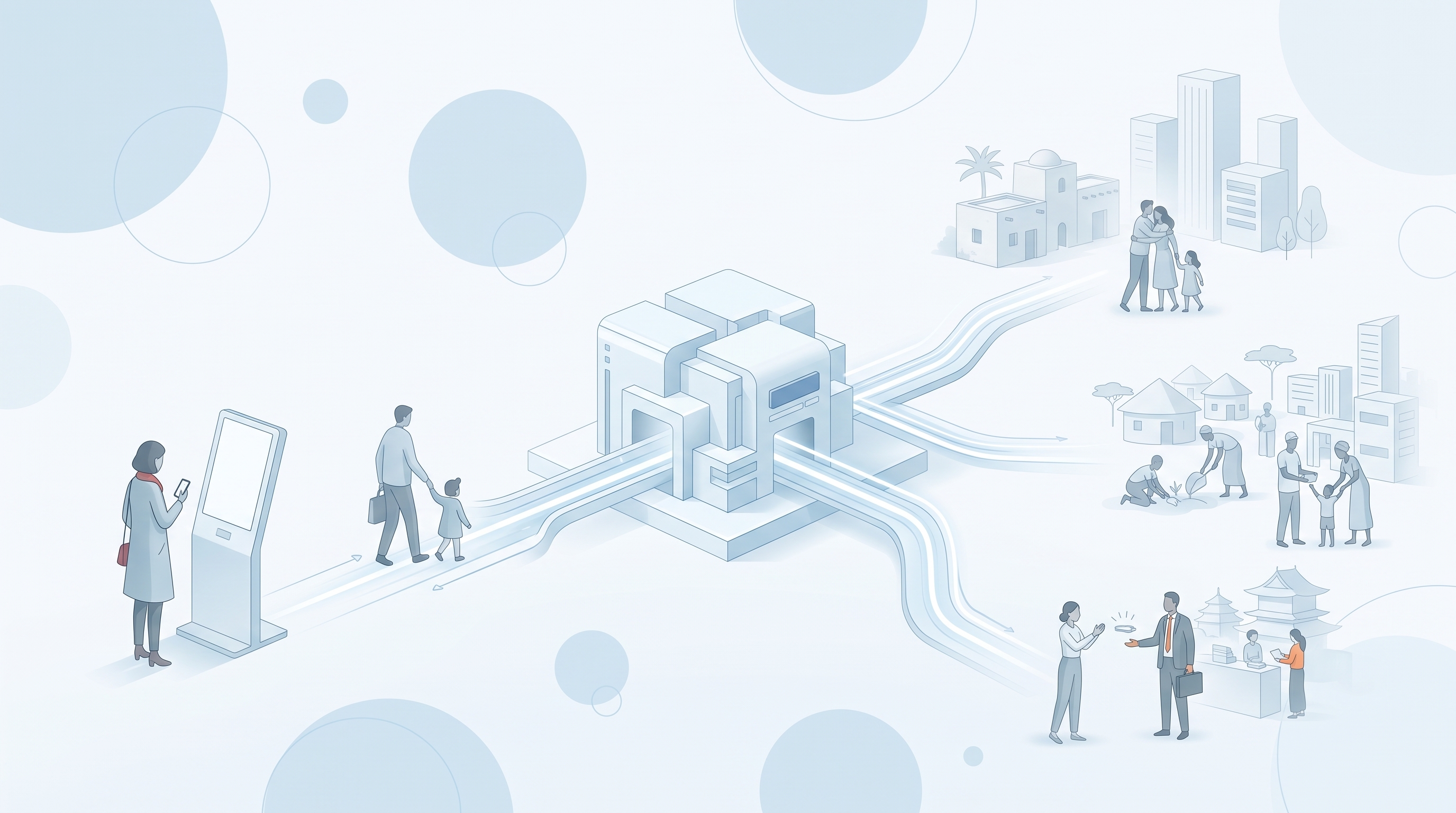
Cross-border settlement is the point at which a remittance company’s funds actually arrive and become usable in the destination market, not when a payment is sent, but when it can be paid out. Traditional correspondent-banking settlement often takes two to five business days, modern payment infrastructure like VirtuaBroker can settle in seconds to minutes. For a remittance company, that difference means faster payouts, less capital tied up in prefunding, and a better experience for the customers it serves.
VirtuaBroker is a cross-border payments company that provides the settlement and payout infrastructure remittance companies use to move money across borders. For the businesses we work with, settlement is the moment the business delivers on its promise: money collected in one country becoming money available in another.
What Faster Settlement Means for Remittance Companies
For a remittance company, settlement speed shapes everything. It determines how quickly a recipient is paid, how much working capital has to sit idle in reserve, and how confidently the business can expand into new corridors. When settlement is slow and unpredictable, every one of those becomes harder, and the customer feels it directly.
People sending money home are often supporting family, covering rent or paying for something urgent. “It will arrive in a few days” is not what they want to hear, and in a market where they can compare providers in seconds, slow settlement is a competitive disadvantage.
Why is traditional cross-border settlement so slow and expensive?
The problem is the route the money takes. When a remittance company relies on the traditional banking system to move funds between countries, those funds usually travel through a chain of intermediary “correspondent” banks, each holding an account with the next and passing the money along one step at a time. Every handoff in that chain adds three things: time, cost, and a loss of visibility.
The data reflects it. According to the Financial Stability Board (FSB), which monitors cross-border payments for the G20, fewer than 45% of business-to-business cross-border payments settle within one business day. On transparency, even among providers that disclose the cost of a payment, only around 63% also make the expected speed clear, and foreign-exchange costs, usually the single largest component, are often marked up in ways that are difficult to see. For a remittance company operating on thin margins and high volumes, those inefficiencies compound across thousands of transactions.
Here is the difference between the traditional banking route and modern settlement infrastructure:
| Traditional settlement | Modern settlement infrastructure | |
|---|---|---|
| Speed | Often 2-5 business days | Seconds to minutes |
| Route | Chain of correspondent banks | Direct, modern rails |
| Prefunding | large balances tied up in advance | Less capital held in reserve |
| FX Cost | Marked up | One clear conversion, closer to mid-market |
| Visibility | Limited once funds leave | Trackable from end to end |
| Expansion | New banking relationship per market | One integration, more corridors |
How does prefunding tie up a remittance company’s capital?
Slow settlement creates a second, less visible cost: prefunding. If funds can take days to arrive, remittance companies often have to pre-position capital in their payout markets, money sitting in accounts ahead of time so that recipients can be paid before the sending funds have actually settled. That capital is effectively frozen. It cannot be used to grow the business, absorb volume spikes, or open new corridors; it exists purely to bridge the settlement gap.
The slower and less predictable settlement is, the more capital a remittance company has to lock away to stay safe. Faster settlement shrinks that requirement. When money moves in seconds or minutes rather than days, less has to be held in reserve to keep payouts flowing, freeing working capital that can go back into the business. For a growing remittance company, that shift from “capital locked in reserve” to “capital available to deploy” can matter as much as the speed itself.
What does modern settlement infrastructure change?
Modern cross-border payment infrastructure replaces the correspondent-banking chain with more direct rails. For a remittance company, that changes the economics in four practical ways:
- Faster payouts: Funds settle in seconds to minutes rather than days, so recipients are paid sooner and the customer experience improves.
- Less prefunding: With settlement no longer measured in days, less working capital has to sit idle in reserve.
- Clearer, lower FX cost: A single, transparent conversion closer to the mid-market rate replaces markups applied at several points in the chain.
- Simpler expansion: Adding a new corridor becomes a matter of configuration rather than negotiating a new banking relationship in every market.
The result is not only a faster payment, but a more efficient business, with better service, freed-up capital, clearer costs, and a lower barrier to growth.
What does this look like in practice?
Let’s take a look at Envia Dinero, a Latin American remittance fintech helping customers move money from the EU to Latin America with greater speed, transparency and affordability. Envia Dinero wanted to serve the large diaspora in Europe sending money back home to Latin America, but that meant handling euro collection and European compliance its existing setup was not built for, and building that side alone would have been slow and costly.
Through a single API integration, VirtuaBroker gave Envia Dinero the European collection and cross-border routing it needed without building that infrastructure itself. Senders in Europe pay in euros through local payment rails; the funds are routed to Envia Dinero’s payout partner in Latin America, which handles final delivery to the recipient. The corridor is built to move from collection to LATAM handoff in seconds, rather than the 2-5 days typical of correspondent banking.
As a result, Envia Dinero gained 20+ new send countries from one integration, more than €1M in monthly volume across 15,000+ monthly transactions, and 10,000+ new customers. Read the full Envia Dinero case study here.
What should a remittance company look for in a settlement partner?
Not all “faster payments” infrastructure is the same. When evaluating a cross-border settlement partner, it is worth asking:
- How fast does settlement actually take, and does that hold around the clock, including weekends and holidays?
- How much prefunding is required, and how does the model affect the capital you need to hold in reserve?
- How is FX handled, is the rate shown upfront, and how close is it to the mid-market rate?
- Can you see where funds are at each stage, or does visibility drop once money leaves?
- How is a new corridor added, a fresh integration and banking relationship, or configuration on top of what you already have?
- How does the partner handle compliance, and how much of that burden sits at the infrastructure layer rather than on your team?
The right answers turn settlement from a constraint into an advantage, something that helps a remittance company serve customers better and grow faster, rather than something it has to work around.
How VirtuaBroker helps
VirtuaBroker provides the collection, settlement and payout infrastructure that lets remittance companies move money across borders quickly and transparently, through a single integration. We focus on the part that has traditionally been slow, expensive, and not very transparent: moving money across borders internationally, so remittance companies can focus on their customers and their growth.
If you run a remittance company and want to move money across borders faster, with less capital tied up and clearer costs, get in touchwith our team.
Frequently asked questions
What is cross-border settlement for a remittance company?
It is the point at which funds a remittance company has collected in one country actually arrive and become usable in the destination country, so the recipient can be paid. Settlement speed determines how quickly payouts happen and how much capital has to be held in reserve.
Why do traditional cross-border payments take so long?
They usually travel through a chain of intermediary correspondent banks, each passing the money to the next. Every handoff adds time, cost and a loss of visibility, which is why settlement can take two to five business days.
How does faster settlement reduce prefunding?
When settlement takes days, remittance companies pre-position capital in payout markets to fund payouts before the funds that were sent arrive. When settlement takes seconds or minutes, far less capital needs to sit in reserve to keep payouts flowing, freeing up working capital.
Does modern settlement infrastructure reduce FX costs?
It can. Instead of markups applied at several points in a correspondent-banking chain, modern infrastructure uses a single, transparent conversion closer to the mid-market rate.
How do I find out more?
Contact our team and we will walk you through how VirtuaBroker’s settlement infrastructure could work for your remittance business.